







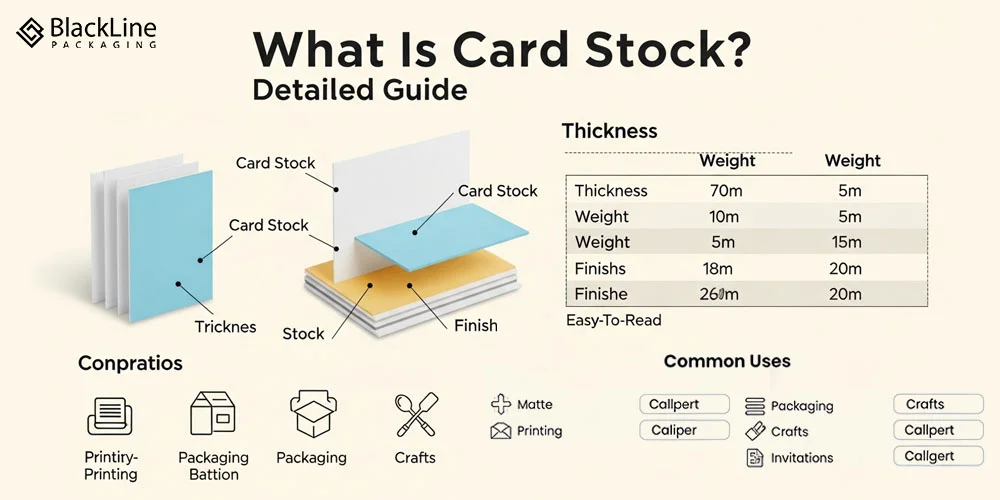
Are you wondering what card stock is and why it is so popular? It is a thick, strong type of paper. It is heavier than the paper we normally use for printers. We use this stock in printing and craft projects, and it always feels solid and professional.
Blackline Packaging designs card stock and gives the best guidance. It comes in many weights, colors, and finishes. This stock is trusted, durable, and easy to use for quality results.
What Is Card Stock?
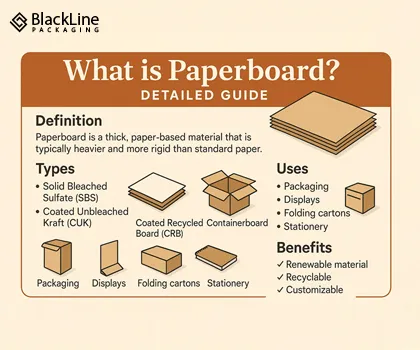
Card stock is a thicker, stronger paper. It is much heavier than normal paper but lighter in weight than cardboard. It is made from wood fibers and comes in different weights and thicknesses.
It prints clearly and holds ink well. Its strength and professional look make it very famous in every office, school, and creative industry.
Is Card Stock Paper Or Cardboard?
Card stock is a type of paper. It is thicker and stronger than regular paper. It is not as thick or rigid as cardboard.
- Cardboard is used to craft custom printed boxes and packaging.
- Card stock is used for business cards, postcards, and crafts. It's both durable and flexible.
So, people often confuse it with cardboard. But it is clearly a paper product.
How Card Stock Is Made
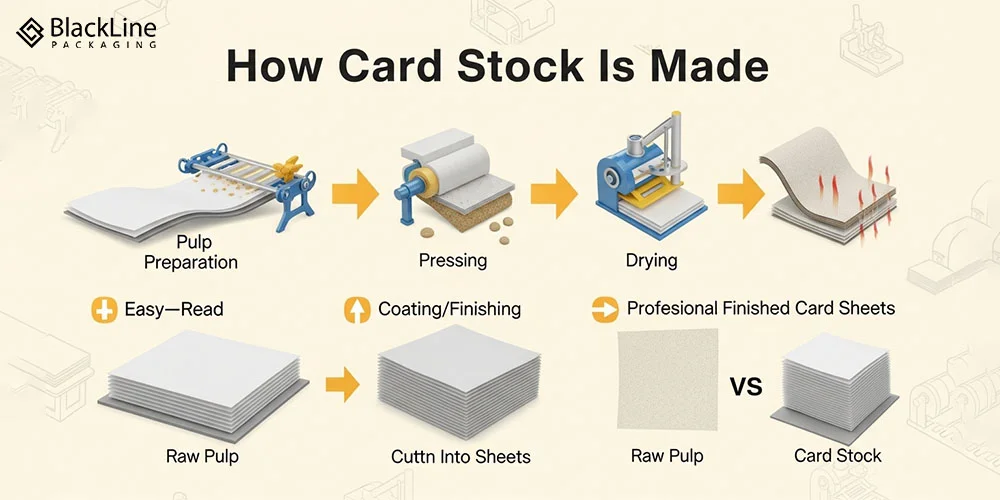 Card stock is made from great wood pulp and recycled paper. It is made through a simple manufacturing process.
- First, wood pulp or recycled fibers are cleaned and mixed with water.
- The mixture is pressed into thin sheets.
- Your paper is pressed again to make it thicker and stronger.
- Its surface is smooth for printing.
- Finally, sheets are ready, cut to size.
This process makes sustainable, highest quality card stock for printing.
Coated Vs. Uncoated Card Stock
Card stock arrive in two kinds: coated and uncoated.
- Coated card stock has a smooth layer on its top. Its help to make colors brighter or printing sharper.
- Uncoated card stock has no layer. It feels natural and writes easily with pens or markers.
Printers/designers must select coated paper for professional use. Crafters and businesses mostly use uncoated paper for classic look. Both kinds are stronger and durable for quality.
Card Stock Weight & Thickness Explained
Card stock weight and thickness show how strong the cardboard is.
- Weight may be measured in pounds (lb) or in grams per square meter (GSM).
- Thickness is mostly measured in points (pt).
Higher weight or more points mean thicker, stronger cardstock. Lighter card stock is easy to fold and cut. Knowing weight helps pick the right cardstock for business cards and postcards.
Understanding GSM, LB, And PT
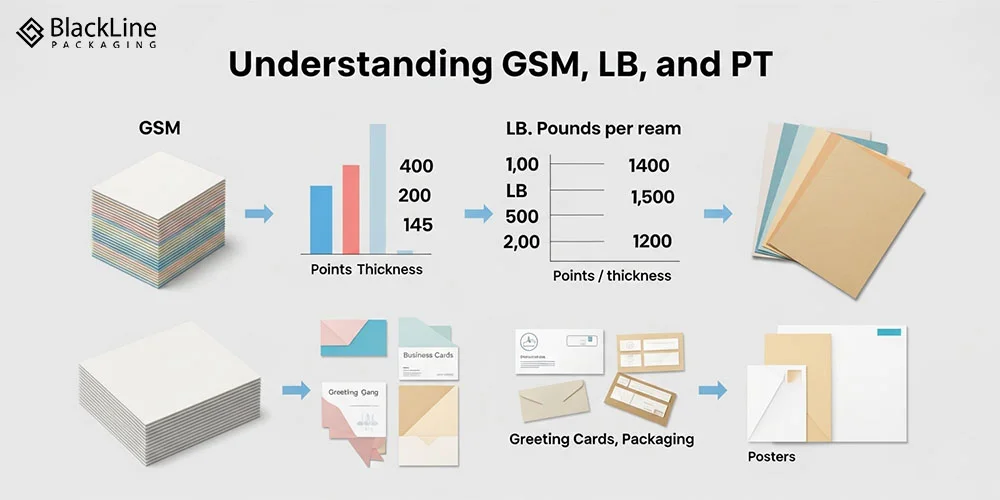 Understanding cardstock starts with GSM, LB, and PT.
- GSM means grams per square meter and shows paper weight.
- LB, and pounds, measures paper weight in the PT, or points, shows thickness.
So, higher GSM, LB, and PT mean thicker and sturdier paper.
- GSM (Grams Per Square Meter)
GSM means it measures how heavy paper is. If GSM is higher, this means our paper is thicker and stronger. Lower GSM stands for lighter or thinner paper. Card stock usually has higher GSM than normal paper. GSM helps choose the right paper for printing and crafts.
- Pounds (US System)
In the U.S, cardstock is measured in pounds (lb). Pounds show the weight of 500 sheets in their basic sizes. Higher pounds means thicker and stronger paper. Heavier paper feels professional. Using the correct LB ensures prints and crafts last longer.
- Points (Caliper Thickness)
Points, or caliper thickness, measure how thick cardstock is. So, one point 1 pt equals (0.001) inch. Higher points mean thick, sturdier paper. Lower points mean thinner or flexible paper.
Common Card Stock Weights
Common card stock weights show how heavy and thick the paper is. Popular weights range from 65 lb to 110 lb. Also, 65–80 lb is lighter and easier to fold and cut. 90–110 lb is thicker and more durable. Choosing the right weight ensures quality and professional results.
- 65 lb / 176 GSM
65 lb card stock equals 176 GSM. It is medium-weight and good for cards and crafts.
- 80 lb / 216 GSM
80 lb card stock equals 216 GSM. It is strong and durable. It is best for business cards and postcards.
- 100 lb / 270 GSM
100 lb card stock equals 270 GSM. It is thick and good for premium business cards and postcards.
- 110 lb / 300+ GSM
110 lb card stock equals over 300 GSM. It is very thick, strong, and ideal for high-quality cards and crafts.
Types Of Card Stock
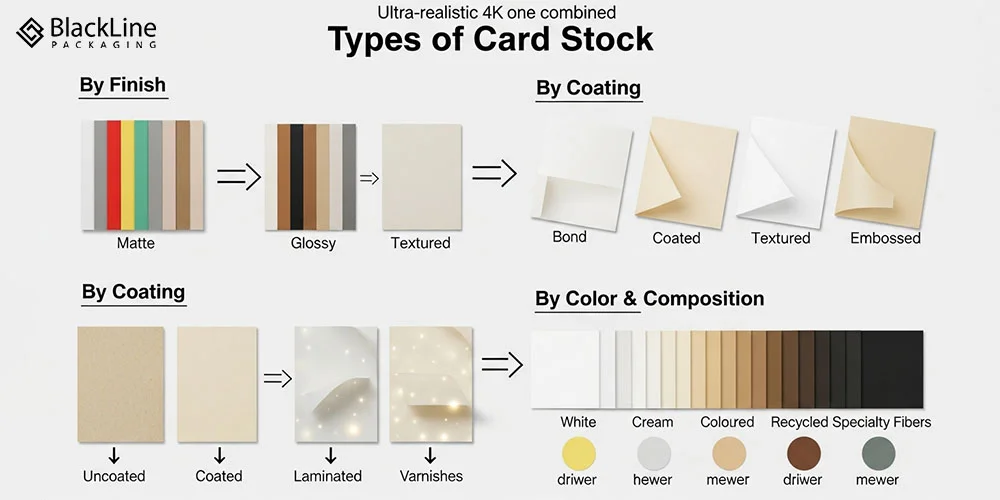 There are different kinds of card stock. They are categorize by finish, coatings, colors, and composition.
By Finish
- Matte Card Stock
Matte card stock has smooth or non-shiny surface. It prints great and is best for writing and invitations.
- Glossy Card Stock
Glossy card stock has a shiny, smooth surface. This makes colors bright and vivid; wow for photos and cards.
- Satin / Silk Finish
Both card stock has soft, smooth finish. It looks good and works best for invitations and cards.
- Textured Finishes (Linen, Felt, Laid)
Textured card stock has patterns such as linen, felt, and laid. It include unique wow look. Also, feels higher-quality for crafts.
By Coating
- Coated One Side (C1s)
C1S cardstock is coated on 1 side only. The coated side gives bright images, while the other stays plain.
- Coated Two Sides (C2s)
C2S cardstock is coated on both sides. It prints vibrant images on the front/back for double-sided designs.
- Uncoated Card Stock
Uncoated cardstock has no coating on it. It has a natural, matte surface, on which you can easily write and print.
By Color & Composition
- White Vs. Colored Card Stock
White card stock is bright and clear, best for printing. Colored card stock includes style and creativity to cards.
- Kraft Card Stock
Kraft card stock is brown or stronger. It is eco-friendly or best for packaging and crafts.
- Recycled Card Stock
Recycled card stock is made from used paper. It is ideal for crafts and printing projects. This is sustainable or nature-friendly.
Common Uses of Cardstock
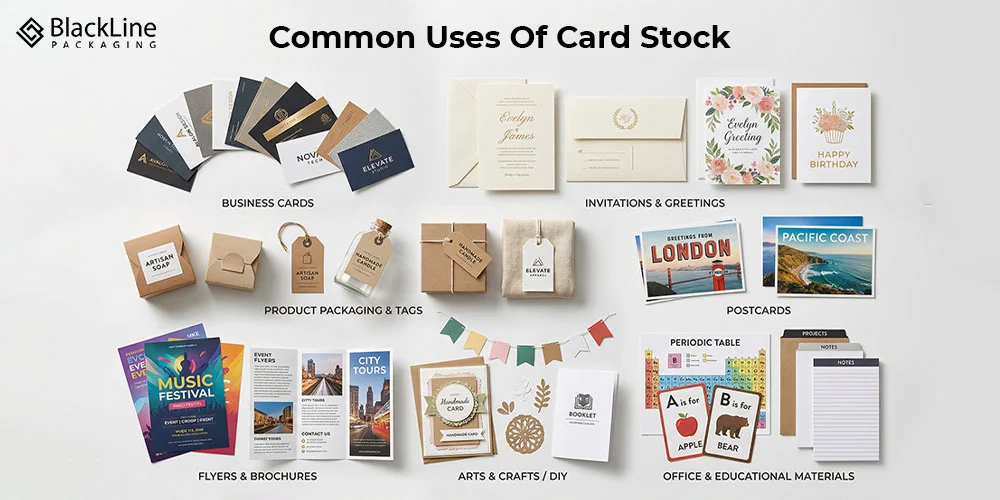 Cardstock is used for business cards or invitations. Also, postcards, flyers, crafts, packaging, and brochures. It is the strongest or most professional.
- Business Cards
Business cards are small, printed with contact info. They use durable card stock for lasting impression.
- Invitations & Greeting Cards
Invitations and greeting cards are made from card stock perfectly. They are durable and good for special events.
- Packaging & Product Tags
Packaging and product tags use card stock. It is stronger and helps items look high-quality.
- Flyers, brochures, postcards
They use card stock perfectly. These are really sturdy and print fantastically. It helps share information and promote an item.
- Arts, Crafts & Diy Projects
Card stock is great for arts, crafts, or Diy projects. It is good in thickness. Also, easy to cut, fold, or decorate.
- Educational & Office Use
Cardstock is used in schools and offices. It is durable and fantastic for charts, reports, and presentations.
Card Stock vs Other Paper Types
Card stock is thicker and stronger than other types of paper. It looks expert and lasts longer. It works well for cards and projects needing durability
|
Paper Type |
Feel & Weight |
Best Used For |
|---|---|---|
|
Cardstock |
Thick & Sturdy |
Business cards, invitations, and menus |
|
Copy/Printer |
Thin & Flexible |
Every day, documents, letters,and notes |
|
Construction |
Rough & Fibrous |
Kids' crafts, school projects |
|
Photo Paper |
Slick & Glossy |
Printing high-quality photographs |
|
Vellum |
Smooth & Sheer |
Overlays, wedding invites, tracing |
Card Stock vs. Printer Paper
- Printer paper is thin, lighter, and easy to bend. It is cheap and works great for daily use things as school reports and emails.
- Card stock is thick and strong. It is hard to bend and feels as greeting card. Use it for business cards and invitations.
Card Stock vs Construction Paper
- Card stock is smooth and high-quality. It is the strongest and does not tear easily. Use it for professional as business cards and wedding invites.
- Construction paper is fuzzy. It is cheap and easy to fold or tear. The colors often fade in the sun. It is perfect for kids' school crafts and finger painting.
Card Stock vs Cardboard
- Card stock is thick, smooth paper. It is strong but easy to fold. It comes in many colors and works in most home printers. Use it for business cards.
- Cardboard is much thicker/ heavier. It often has a wavy middle layer for strength. It is harder to bend and use it for shipping boxes.
Card Stock vs Cover Stock
- Card stock is smooth and versatile. It is measured by its weight in pounds. It is very popular for scrapbooks and greeting cards.
- Cover stock is often heavier and tougher. It is measured by thickness in points. It usually has a glossy/textured finish. Use it for professional book covers.
How To Choose The Right Card Stock
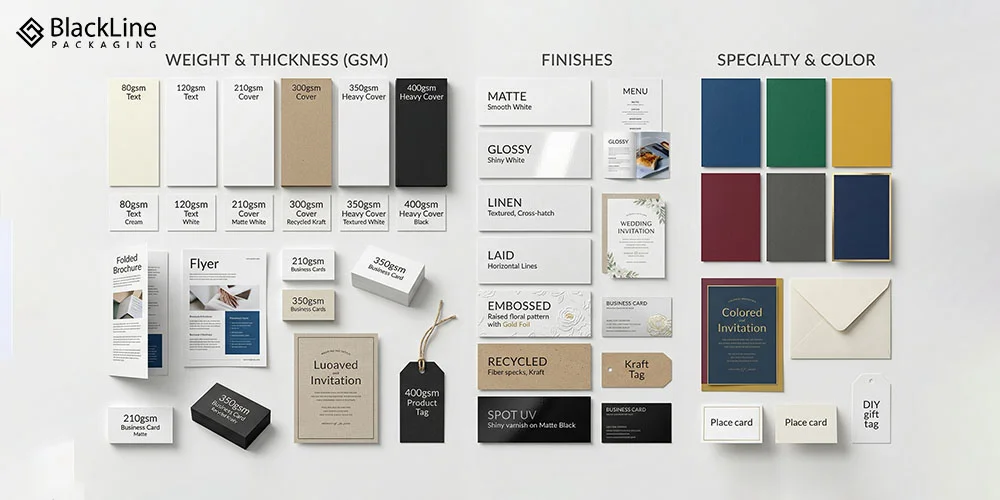
- Select card stock by its weight, thickness, and finish. Heavier cardstock is stronger.
- Pick a finish that fits your work.
- Consider color and coating for printing high-quality.
Matching the right kinds ensures long-lasting quality.
- Purpose-Based Selection
Let's choose card stock based on purpose.
- For printing, pick coated paper for clear, bright images.
- For crafting, use thick paper that folds and cuts easily.
- For packaging, choose stronger card stock that holds its shape and is safe for items.
Selecting right card stock ensures professional results and durability. Also, a high-quality appearance for every project.
- Printer Compatibility
Check printer compatibility when choosing card stock. Always check your printer’s maximum weight or thickness. Choosing compatible card stock ensures finishes and professional-looking results for cards and invitations.
- Finish And Color Considerations
Card stock arrive in many finishes and colors. Some of them are smooth, glossy, matte, or textured. Smooth and glossy make colors brighter and prints sharper. Matte and textured give a creative look. Picking the right finish and color ensures eye-catching and high-quality results.
- Durability And Folding Requirements
Thicker cardstock is stronger and resists bending. Lighter cardstock is easier to fold for invitations or crafts. If the project needs repeated handling, pick strong cardstock to keep its shape. For folded items, choose a weight that bends without cracking. Matching durability and folding needs ensures success for business cards and creative projects.
Can You Print On Card Stock?
Yes, you may print on card stock. Coated cardstock gives bright images. Uncoated card stock works well for simple printing. Always check your printer’s thickness or weight. Using right card stock ensures wow results for invitations and postcards.
Printer Requirements And Limitations
Printers have limits for card stock. Check your printer’s weight/ thickness before printing.
- Inkjet printers need paper that absorbs ink perfectly.
- Laser printers require cardstock that handles heat without jamming.
Always test the tiny sheet first. Following printer requirements ensures smooth printing and a professional look for invitations.
Best Ink Types For Card Stock
The best ink for card stock really depends on the printer.
- For inkjet printers, use pigment inks for the best colors.
- For laser printers, toner is used and melts into the paper. It makes long-term use of prints.
Using the right ink ensures the highest quality results.
Common Printing Mistakes To Avoid
Common printing mistakes on card stock can ruin your project.
- Printing on the wrong side may cause poor ink absorption.
- Skipping test prints can lead to color.
- Using the wrong ink can fade.
- Folding card stock too early may quickly crack the paper.
- Always check weight/thickness, printer settings, or finish.
Environmental Impact & Sustainability
Card stock can impact the environment. Using recycled materials saves trees. FSC-certified card stock arrives from responsibly managed forests.
Card stock is reusable. Most kinds can go in paper recycling. So, avoid glossy or heavily coated sheets. Plan designs, use test prints, choose the correct card stock, and recycle scraps. This reduces waste and saves money and resources.
Expert Tips For Working With Card Stock
- Use the right weight, best finish, and tools. So, test print first, cut carefully, and fold slowly for expert results.
- Store card stock flat in a dry, cool area.
- Handle carefully to avoid wrinkles and moisture damage.
- Use sharp cutters and rulers.
- Score folds before bending.
- Handle finished pieces carefully.
Conclusion
Cardstock is a very thick, strong, and sustainable type of paper. It is heavier than regular printer paper. It is best for business cards and invitations. Also, postcards, menus, and craft projects.
Cardstock comes in many weights, measured in GSM, LB, or PT. Heavier card stock feels stronger. It arrives in unique finishes and colors, which give you creative freedom. Blackline Packaging offers sustainable paper that ensures your projects stay high-quality while supporting the environment.
Frequently Asked Questions
We've answered all the common questions you may have before ordering a custom box.
What Is Card Stock Used For?
Card stock is used for business cards, invitations, postcards, crafts, flyers, brochures, packaging, and other creative or professional projects.
Is Card Stock The Same As Cardboard?
Card stock is not the same as cardboard. It is thinner, more flexible, and used for printing, cards, and crafts.
What Gsm Is Considered Card Stock?
Card stock usually ranges from 160 to 300 GSM. Higher GSM means thicker, stronger paper for cards, crafts, and printing.
What Is The Thickest Card Stock Available?
The thickest card stock is over 300 GSM or 110 lb. It is very strong, durable, and ideal for premium projects.
Is Card Stock Recyclable?
Yes, most card stock is recyclable. Check for coatings or finishes, as glossy or laminated types may not be recyclable.
Which Card Stock Is Best For Invitations?
Thick card stock, 80–110 lb or 216–300+ GSM, with a smooth or textured finish, is best for invitations.
What Is The Difference Between Cover Stock And Card Stock?
Cover stock and card stock are similar. Cover stock is usually lighter; card stock is thicker, stronger, and more durable.
Does Card Stock Work With Inkjet Printers?
Yes, card stock works with inkjet printers. Use compatible weight and finish for clear, smudge-free printing and professional results.
How Do I Choose The Right Card Stock?
Choose card stock by weight, thickness, finish, and purpose. Consider printing method, folding needs, and project type for best results.