







Tissue boxes are one of those everyday products we hardly think about, yet their size, shape, and construction play a huge role in convenience and branding. Whether they are placed in the living room, used in a car, set on a bathroom shelf, or kept at a workplace desk, the right tissue box dimensions determine how well the product fits into people’s lives and how easily they can use it.
At Blackline Packaging, we work with businesses that need custom-sized tissue boxes for retail, hospitality, healthcare, and household markets. This article explains the most commonly used tissue box dimensions, the different shapes available, and how brands determine the right measurements for functionality, comfort, and cost-efficient packaging.
Before diving into each type, it helps to understand one thing: tissue box sizes are not universal. Most brands follow a general standard, but companies may adjust their box measurements depending on the number of tissues, paper ply, fold style, and dispenser opening.
If you want to understand how tissue boxes fit into the larger world of product presentation and protection, read our guide on What Is Packaging?.
Let us walk through every dimension type, step by step, so you have all the practical knowledge needed to design or select a tissue box that fits your product and customer needs.
Tissue Box Dimensions
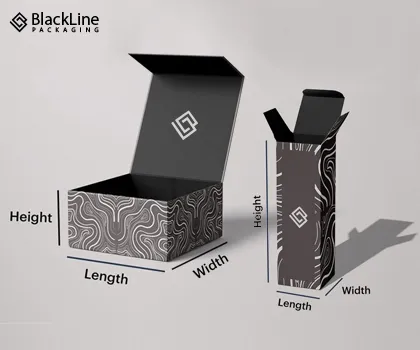
The three standard measurements that are typically mentioned when discussing tissue box dimensions are:
- Length
- Width
- Height
The box's volume and shape are determined by these measurements taken together. Tissues will dispense smoothly without becoming stuck, crushed, or folded incorrectly if the proper balance is maintained.
Maximum box dimensions are frequently set by retail display fixtures. Manufacturers must create tissue boxes that maximize accessibility and visibility while fitting into typical retail shelving systems.
You can also examine our Length Width Height Dimensions Guide, which simplifies the measurement procedure with straightforward examples, to gain insight into how packaging sizes are determined.
Standard Tissue Box Dimensions

Even though there are many shapes, the U.S. market still recognizes a set of standard tissue box dimensions.
- Rectangular (100–160 tissues):
8.5–9.5 in (Lenght) x 4–5 in (Width) x 3–4.5 in (Height) - Square (80–120 tissues):
4.5–5.5 in (Length/Width) x 5–7 in (Height) - Cube (40–80 tissues):
4–5 in (Length/Width /Height) - Large box (180–250 tissues):
9–10.2 in (Lenght) x 4.5–5.5 in (Width) x 4–6 in (Height)
If you are designing packaging for a new tissue line, Blackline Packaging helps you choose everything.
If you are planning printed artwork for your tissue boxes, our Ultimate Guide: What Is PMS Color? Explains how brands use standardized color systems to achieve consistent printing results.
Square Tissue Box Dimensions
Square tissue boxes usually hold a medium number of tissues. Like between 80 and 120 sheets. They are tall enough to create a clean pull, and they are compact enough for use in bathrooms and bedrooms.
Standard dimensions include:
- Length: 4.5–5.5 inches
- Width: 4.5–5.5 inches
- Height: 5–7 inches
These boxes are visually appealing. They give brands more space to print patterns and color schemes. It looks elegant on shelves. Many premium facial tissue brands prefer this shape.
Rectangular Box Dimensions
Rectangular boxes are the most widely recognized tissue box style. They dispense tissues through a center slit and are easier to manufacture since the folding pattern aligns with the rectangular structure.
Common rectangular tissue box dimensions:
- Length: 8.5–10 inches
- Width: 4–5 inches
- Height: 3–5 inches
Why brands choose this shape:
- Fits more tissues
- Simple to stack and ship
- Works well with folding machines
- Classic and familiar to consumers
If you are planning a private-label tissue product, this is the shape most supermarkets expect.
Custom Tissue Box Dimensions
At Blackline Packaging, we understand that standard sizes don't always meet every business need. Custom tissue box dimensions allow brands to differentiate themselves and optimize packaging for specific products or market niches.
Businesses planning large or small production runs can also review our guide on What Is MOQ in Packaging?, which helps you understand minimum order quantities and how they affect pricing.
Tissue Box Measurements

Tissue box measurements vary across industries, but most fall into predictable categories. A typical set of measurements includes:
- Length: Horizontal long edge
- Width: Horizontal short edge
- Height: Top-to-bottom measurement
These measurements allow you to estimate total volume, internal capacity, and the required board strength.
Standard Measurement Patterns:
A few standard measurement sizes are:
1. Box for 100–120 tissues
- Rectangular shape
- Length: 8–9.5 inches
- Width: 4–5 inches
- Height: 3–4 inches
2. Box for 150–180 tissues
- Length: 8.5–9.5 inches
- Width: 4.5–5 inches
- Height: 4–5 inches
3. Cube tissue box (typically 50–80 tissues)
- Length: 4–5 inches
- Width: 4–5 inches
- Height: 4–5 inches
4. Square tall tissue boxes
- Length: 4–5.5 inches
- Width: 4–5.5 inches
- Height: 6–7 inches
These are not fixed, just general ranges. You can customise everything.
Measurement Tips
Some of the measurement advice is as follows:
- Always use a measuring tape so you get clear and reliable numbers.
- A firm ruler can help you be even more accurate.
- If the tissue box bulges a little when it’s full, measure around the widest part.
- Measure the inside of the box to be sure your tissues will fit well.
- Keep all your measurements in the same unit so nothing gets mixed up.
Standard Tissue Box Size
When people ask about the “standard tissue box size,” They usually mean the most widely available household tissue box. In the U.S. market, the standard size is the rectangular box. It is used for 100–160 tissues.
A common standard size is:
- Length: 8.875 in
- Width: 4.75 in
- Height: 3.25 in
This size fits well. It is comfortable to pick up. It is lightweight to moves easily. They are so balanced that they do not tip when a tissue is pulled.
Retailers prefer this size because it stacks efficiently on shelves. Also, this size maximizes display space.
Small Tissue Box

For limited space, small tissue boxes are perfect.
Typical small tissue box dimensions include:
- Length: 4–6 inches
- Width: 4–5 inches
- Height: 2–4 inches
Small boxes are popular for:
- Hotels offering compact amenities
- Beauty salons using facial tissues at stations
- Car interior organizers
- Gift set packaging
Many brands choose small tissue packaging to reduce cost, material use, and shipping weight.
Square Tissue Box Size

A square tissue box is different from a cube box because its height may vary. A square box is usually wider and more visible on shelves, giving designers extra room for branding.
Common square tissue box sizes:
- Length: 4–5.5 inches
- Width: 4–5.5 inches
- Height: 5–7 inches, depending on tissue count
These boxes work best for facial tissues because the tissues fold vertically and pull upward through the top dispensing opening.
Brands choose square boxes when they want packaging that stands taller and offers more visual presence.
Large Box Tissue

Large tissue boxes are perfect where tissues are used frequently.
Common large box tissue dimensions:
- Length: 9–10.2 inches
- Width: 4.5–5.5 inches
- Height: 4–6 inches
They are used most often in:
- Offices
- Hospitals
- Public areas
- Waiting rooms
- Classrooms
Because of their size, they offer longer refill intervals and reduce packaging waste over time.
Large tissue boxes maintain the standard length and width (9" x 4.5"), but there is often an increase in their height to:
- 3 inches for medium capacity (280-300 tissues)
- 4 inches for high capacity (400+ tissues)
- 5 inches for extra-large family packs (500+ tissues)
Cube Box Size

A cube tissue box is compact and nearly identical in all dimensions. It is often chosen for style and convenience.
Typical cube box size:
- Length: 4–5 inches
- Width: 4–5 inches
- Height: 4–5 inches
Because of the uniform shape, these boxes are easy to place anywhere, bedside tables, car cup holders, salon stations, and office desks. Cube boxes usually contain 40–80 tissues because of their limited internal space.
Surface Area Of A Tissue Box
Understanding the surface area of a tissue box helps estimate printing needs, branding layout, and material consumption.
Surface area depends on the shape. For example, surface area for a rectangular box:
Surface Area = 2(LW + LH + WH)
Where:
L = Length
W = Width
H = Height
This helps designers understand how much printed board is needed and where the artwork will fold.
Blackline Packaging uses these calculations while preparing dielines for clients so the printed layout aligns perfectly once the box is assembled.
For brands developing a new tissue box structure, our resource on What Is a Dieline in Packaging and Printing? Explains how dielines guide cutters, folds, bleed areas, and final box shape.
Industry Guidelines and Rules
Different market segments require different dimensions:
- Retail: Standard sizes that fit established shelf configurations
- Hospitality: Elegant designs with premium dimensions
- Automotive: Compact sizes that fit cup holders
- Healthcare: Hygienic, easy-to-dispense formats
- Travel: Pocket-sized portable options
Global Standards
Unlike other packaging products that differ by region, tissue box measurements stay relatively consistent in markets worldwide. This standardization benefits international brands and simplifies supply chain management.
Shipping Considerations
Understanding UPS box dimensions and shipping requirements helps ensure your tissue packaging is optimized for distribution efficiency and cost control.
Environmental Considerations
For brands focusing on shipping efficiency, our guide Understanding About UPS Box Dimensions and Sizes explains how standard shipping rules affect packaging size selection.
Environmental Considerations
Modern tissue box dimensions must balance functionality with sustainability. Right-sizing your tissue boxes reduces material waste and transportation emissions. Steer clear of dimensions that necessitate excessive adhesives or non-paper components that make recycling more difficult.
You might also find our article What Is Cardboard and Where Does It Come From useful for learning about the materials used in packaging.
Conclusion
Manufacturers, retailers, and buyers must know about tissue box dimensions. Understanding measurements, surface area calculations, and material considerations is important. You can customise any size you want according to your customers' preferences.
Ready to explore custom tissue box dimensions for your business? Contact Blackline Packaging today to discuss your packaging needs.
Frequently Asked Questions
We've answered all the common questions you may have before ordering a custom box.
What is the most common tissue box size?
The most common size for a tissue box is the rectangular box.
What shapes do tissue boxes come in?
More than you'd expect, honestly. Rectangles are what everyone knows, but I've seen cubes that fit perfectly in car cup holders. Square boxes work well on shelves, and those tall skinny ones are lifesavers when you don't have much counter space. Each shape has its moment.
How do I choose the right tissue box dimensions?
Just think about your actual situation. Got a toddler with constant sniffles? Go bigger. Limited counter space in a tiny apartment bathroom? Maybe stick with compact. Thicker tissues mean you need a roomier box. And here's a tip: check how they dispense before committing. Some brands pop up smoothly, others bunch up, and you end up pulling out five at once.
Are tissue box sizes standardized across all brands?
No. There are popular sizes that most companies hover around, but everyone tweaks things differently.
What material is used for tissue boxes?
Pretty much all cardboard or paperboard. The dollar store boxes feel thin and flimsy, while name brands use sturdier stuff. They coat them so moisture doesn't make them soggy in the bathroom, and print designs straight onto the surface. You can definitely feel the difference in quality between cheap and expensive boxes.
Can I customize the size for my brand?
Yes. We do this at Blackline Packaging all the time.
Are large tissue boxes more eco-friendly?
Generally, yeah. One big box beats three small ones because there's less packaging waste per tissue. You're also not driving to the store as often.
Are the cube and square box sizes the same?
No. Cube boxes and square box sizes are not the same.
Why does tissue box height matter?
Ever pulled a tissue and gotten three stuck together? That's probably a height issue. Too short and tissues get compressed. Too tall with not enough inside, and they flop around. The right height makes tissues pop up one at a time, nice and clean.
How is the surface area of a tissue box calculated?
With this, you can easily calculate surface area. SA = 2(lw + lh + wh)